
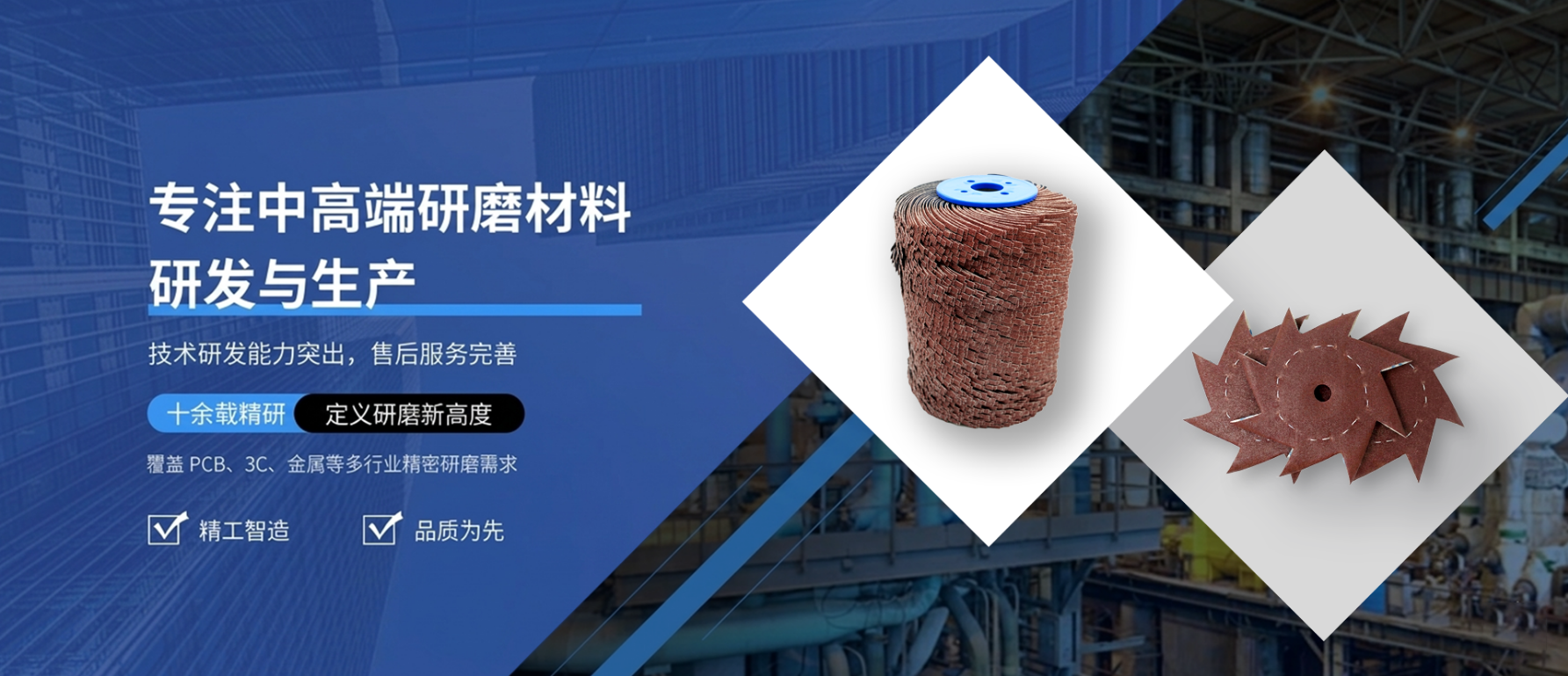

Sand cloth wire wheel, commonly known as "sand cloth wire wheel" or "polishing wire wheel", is a grinding and polishing tool composed of sand cloth strips arranged in a wheel like and radial pattern. Its core features are good flexibility, fast heat dissipation, and strong copying ability. It is mainly used for precision grinding, drawing, and polishing of metal and non-metal materials, especially for handling complex surfaces and pursuing uniform textures.
Surface drawing treatment: This is the most iconic use of sanding cloth wheels. For metal workpieces such as stainless steel, aluminum, copper, etc., it can grind out uniform, delicate, and continuous long filament patterns (also known as straight or drawn). Due to the softness of the wire, it can adhere to the surface of the workpiece, ensuring that even plates with curvature or slight unevenness have uniform and consistent wire patterns when pulled out, without producing deep pits or broken lines like hard grinding wheels.
Complex shape polishing: The threads of the sanding cloth wheel unfold radially when rotating at high speed, with good imitation. This feature makes it particularly suitable for:
Profile and frame: such as aluminum alloy door and window frames, edges, grooves, and curved surfaces of furniture metal feet polished.
Irregular shaped parts: such as hardware handles, faucets, lock panels, and other irregularly shaped workpieces, can handle multiple surfaces simultaneously, reducing the number of workpiece flips.
Remove burrs and chamfers: After metal processing, the sanding cloth wheel can efficiently remove small burrs on the edges of the workpiece and around the drilling hole, while also completing slight edge chamfers. Compared to hard grinding wheels, it is less likely to change the original geometric shape of the workpiece and is more suitable for precision parts.
Transition and Fine Grinding: After rough grinding and before mirror polishing, sanding cloth wheels are commonly used to remove the coarser sand surface left by the previous process, achieving a delicate matte or satin finish on the surface. Targeting the flexibility of different materials (such as aluminum alloy, copper, zinc alloy), it is widely used in industries such as bathroom, hardware, and electronic casings.
When in use, sanding wire wheels are usually installed on desktop grinding machines, angle grinders, or straight grinders. Its particle size range is relatively wide, generally ranging from coarser P60 (strong drawing, deburring) to finer P400 (precision grinding, finishing). According to the different materials of sandpaper, it can be divided into two categories: alumina (suitable for iron, stainless steel) and silicon carbide (suitable for soft metals or non metals such as copper and aluminum).